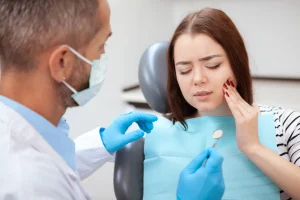
Stop the toothache. Save the tooth.
When decay, a crack or injury reaches the tissue inside your tooth, root canal treatment can remove the source of the problem and help you keep your natural tooth.
Root canal treatment is designed to relieve tooth pain — not add to it.

Six signs the problem may be deeper than a cavity.
A damaged or inflamed pulp doesn’t always look obvious from the outside. These are some of the reasons a tooth deserves a closer look.
A toothache that won’t quit
A tooth that suddenly reacts to cold, heat or sweets may be telling you something has changed.
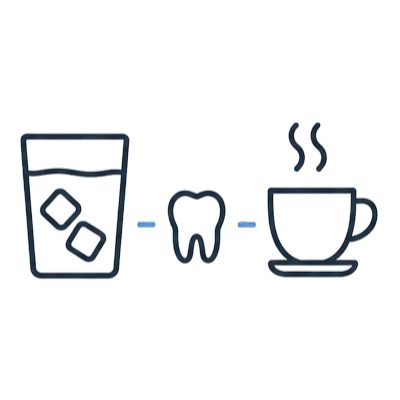
Lingering hot or cold sensitivity
Sensitivity that continues after the hot coffee or cold drink is gone can point to a deeper problem inside the tooth.
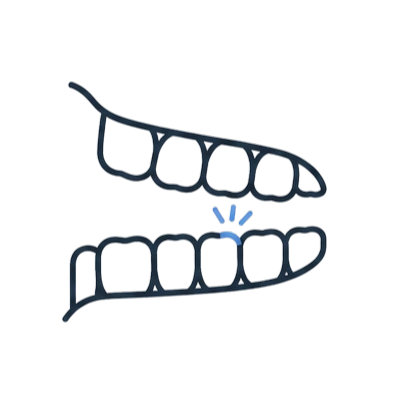
Pain when you bite
A tooth that hurts when chewing or when pressure is applied should be evaluated rather than simply avoided.
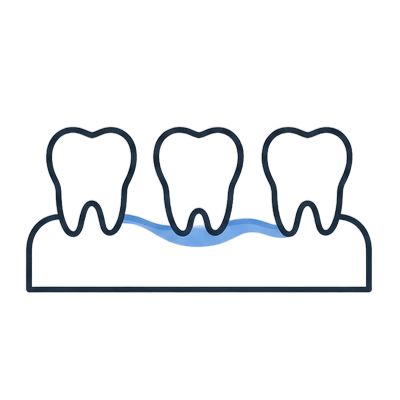
Swollen or tender gums
Localized swelling or tenderness around one tooth may be connected to inflammation or infection near the root.
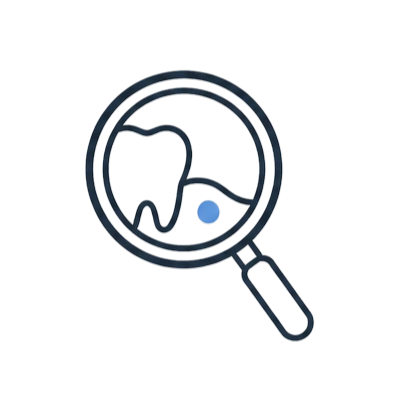
A bump on the gum
A recurring pimple-like bump near a tooth can be a sign that an infection is draining through the gum.
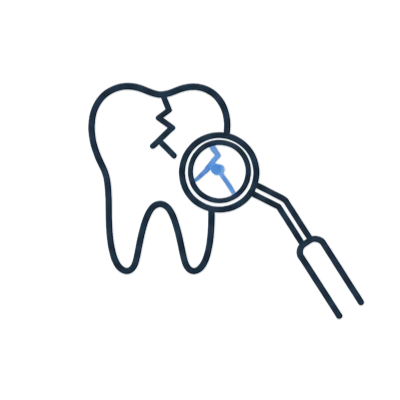
A cracked or injured tooth
A deep crack, chip or previous injury can damage the pulp even when the tooth doesn’t hurt right away.
Tooth pain can come and go. The underlying problem may not.
The discomfort people associate with “needing a root canal” usually comes from the inflamed or infected tooth. Treatment removes that source from inside the tooth.
The pain isn’t the root canal. It’s the reason you may need one.
Inside every tooth is soft tissue called the pulp, which contains nerves, blood vessels and connective tissue. Deep decay, cracks, repeated dental work or an injury can inflame or infect that tissue.
Once the pulp can no longer recover, a filling on the outside of the tooth isn’t enough. Root canal treatment addresses the problem from inside: the damaged pulp is removed, the canals are cleaned and shaped, and the space is filled and sealed.
The goal is straightforward — remove the source of inflammation or infection while preserving the natural tooth whenever it can be predictably restored.
Root canal treatment is only part of restoring the tooth.
Treating the inside solves one part of the problem. The tooth also needs to be sealed and, when necessary, strengthened for everyday biting and chewing.
Root Canal Treatment
The inflamed or infected pulp is removed, and the root canals are carefully cleaned, shaped, filled and sealed.
- For a restorable tooth with pulp that is irreversibly inflamed, infected or damaged.
- For every treated tooth that needs its access opening securely restored after root canal therapy.
Seal & Rebuild the Tooth
After the canals are treated, the access opening is closed and the lost tooth structure is rebuilt with an appropriate restorative material.
Larger Tooth Restoration
When too much tooth structure has been lost for a filling alone, a stronger restoration such as a crown may be recommended to rebuild and protect the tooth.
- Often appropriate for molars, premolars and other weakened teeth that need additional protection after treatment.
From painful tooth to protected tooth.
- Confirm what the tooth needs
We examine the tooth, test it and review dental imaging to determine whether the pulp is damaged and whether root canal treatment can save it.
- Numb, clean & seal
Once you’re comfortable, we access the inside of the tooth, remove the damaged pulp and carefully clean, shape and fill the root canals.
- Restore & protect it
The tooth is sealed and restored. Depending on its location and remaining structure, a final crown may be recommended for additional protection.
200 reasons to choose us.
We don't ask you to trust us. We let our patients do the talking.
I hadn’t been to the dentist in longer than I wanted to admit, so I was expecting a lecture. Instead, the whole visit felt easy. My cleaning was gentle, everything was explained clearly, and I left knowing exactly what to keep an eye on and when to come back.
Melissa R.
Teeth Cleaning & Exam
Bethesda, MD
5.0 ★ · Over 200 reviews on Google · Read all reviews →
I had a small chip on my front tooth that bothered me in every photo. I expected a much bigger treatment, but bonding was enough. The shade matches beautifully and the tooth still looks completely natural.
Laura M.
Cosmetic Dental Bonding
Bethesda, MD
5.0 ★ · Over 200 reviews on Google · Read all reviews →
I drink coffee every day and felt like my teeth had gradually become much darker than they used to be. I wanted them brighter, but I definitely didn’t want that artificial super-white look. They helped me choose a shade that still looked like me, and the difference was exactly what I wanted. My smile looks fresher without looking “done.”
Emily S.
Professional Teeth Whitening
Bethesda, MD
5.0 ★ · Over 200 reviews on Google · Read all reviews →
I avoided the dentist for years because of a terrible experience when I was younger. By the time I finally booked, I was embarrassed about both my teeth and how anxious I was. Nobody made me feel judged. They talked through the sedation options with me beforehand, explained exactly what to expect and made the appointment feel completely manageable. It was the first time I left a dental office thinking, “I can actually do this again.”
Lauren D.
Sedation Dentistry
Kensington, MD
5.0 ★ · Over 200 reviews on Google · Read all reviews →
I used to think preventive dentistry just meant getting my teeth cleaned and coming back six months later. They actually took the time to explain why I kept getting cavities in the same areas and helped me change a few things at home. We also added extra protection to a couple of teeth that needed it. My visits feel much more proactive now instead of waiting for the next problem.
Nicole B.
Preventive Dentistry
Kensington, MD
5.0 ★ · Over 200 reviews on Google · Read all reviews →
I had been dealing with jaw soreness and painful clicking for months and wasn’t even sure whether I should see a dentist about it. The appointment was very thorough. They asked when the pain happened, checked how my jaw was moving and explained the difference between the joint and the surrounding muscles. I appreciated that the plan felt conservative and specific to what I was actually experiencing.
Sarah L.
TMJ Evaluation & Treatment
Chevy Chase, MD
5.0 ★ · Over 200 reviews on Google · Read all reviews →
I had already been diagnosed with sleep apnea but struggled with my CPAP enough that I wasn’t using it consistently. I talked with my sleep doctor about alternatives and then came to Bethesda Dental Group for an oral appliance. The fitting process was easy, the adjustments were explained clearly, and traveling is much simpler now. My wife is also very happy that the snoring has improved.
James R.
Sleep Apnea Oral Appliance Therapy
Bethesda, MD
5.0 ★ · Over 200 reviews on Google · Read all reviews →
I had a badly broken molar and kept putting the appointment off because I was nervous about having it removed. They showed me why the tooth couldn’t really be saved, talked me through everything before starting, and the actual extraction was much more manageable than I had built it up to be. I also appreciated that we talked about what to do with the space afterward instead of just stopping there.
Rachel P.
Tooth Extraction
Bethesda, MD
5.0 ★ · Over 200 reviews on Google · Read all reviews →
I went in with a toothache that had kept me up the night before and was honestly dreading hearing “root canal.” The team explained exactly what they were seeing and what would happen next. Once I was numb, the appointment was much easier than I expected, and the relief afterward made me wish I had come in sooner.
Michael T.
Root Canal Treatment
Bethesda, MD
5.0 ★ · Over 200 reviews on Google · Read all reviews →
I chipped an old filling and was convinced it was going to turn into a much bigger procedure. Dr. Shawn showed me exactly what was happening, explained my options clearly, and repaired the tooth without making the visit stressful. My bite feels completely normal again, and the new filling blends in so well I can barely see it.
Daniel M
Composite Filling Replacement
Bethesda, MD
5.0 ★ · Over 200 reviews on Google · Read all reviews →
Save the tooth now — and make the cost easier to manage.
Root canal treatment and the restoration your tooth may need afterward are eligible for flexible payment options through Cherry, Sunbit, Proceed, Care Credit. No hard credit check · Approved in seconds · Plans from 3 to 24 months. We also accept most PPO insurance plans.
That toothache is asking for an answer.
If a tooth is throbbing, lingering after hot or cold, painful to bite on or simply doesn’t feel right, let us find out what’s happening and whether root canal treatment can save it.