Change what you notice about your smile — without changing what makes it yours.
Porcelain veneers are thin, custom-made ceramic shells bonded to the front of selected teeth to change their visible shape, color, proportions or symmetry. They can address several cosmetic concerns at once while preserving a natural-looking smile.
The goal isn’t a “veneer smile.” It’s a smile that looks like it belongs to you.

Six smile details porcelain veneers can reshape at the same time.
Veneers are versatile because the ceramic covers the visible front surface of the tooth. That allows us to plan more than color alone — but only after making sure the underlying teeth and gums are healthy.
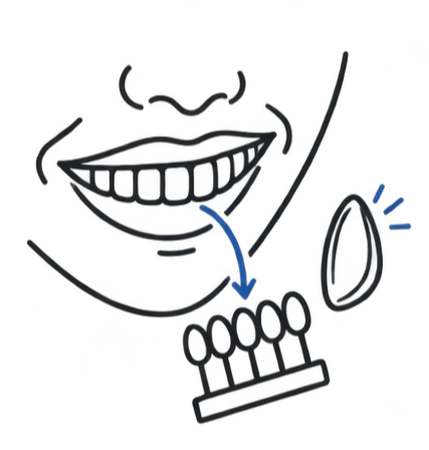
Stubborn discoloration
When a tooth’s color doesn’t respond predictably to whitening, porcelain can mask the visible discoloration instead of trying to bleach it away.
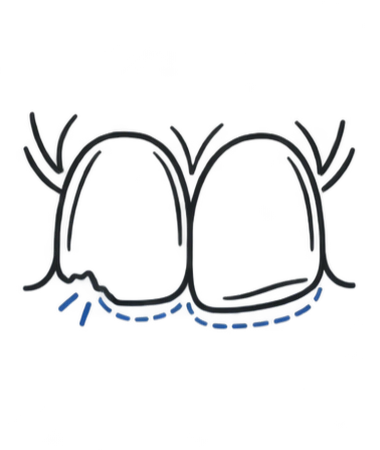
Small chips & worn edges
Veneers can rebuild the visible contour of selected front teeth when minor chips or wear make the smile look uneven.
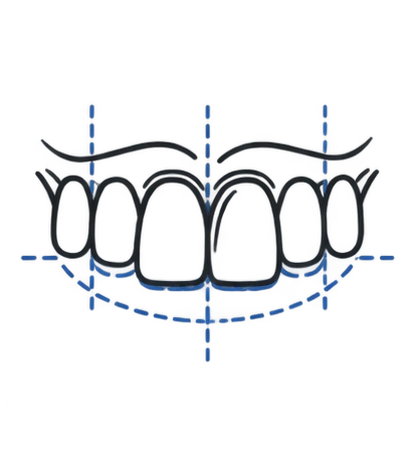
Uneven tooth shapes
A tooth that looks too short, narrow, irregular or misshapen can be redesigned to fit more naturally with the teeth around it.
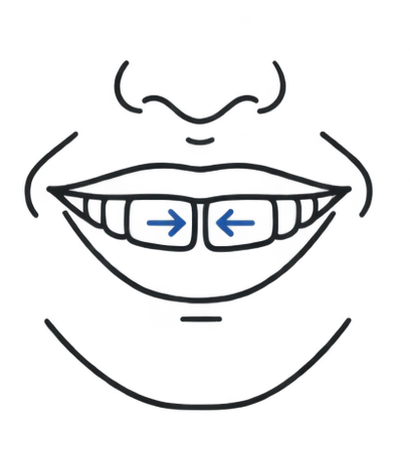
Small spaces between teeth
Selected gaps can sometimes be visually closed by carefully changing the width and proportions of the neighboring teeth.
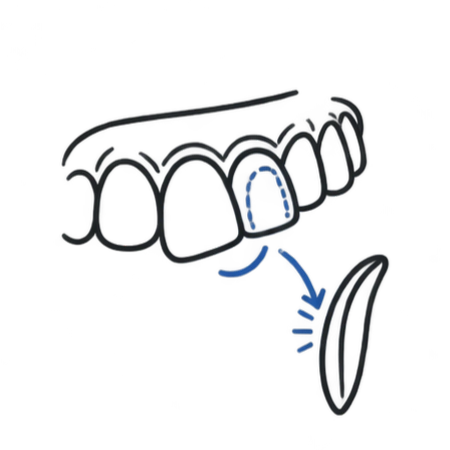
Minor visual misalignment
Slightly crooked or irregular-looking teeth can sometimes be visually balanced with veneers when orthodontic movement isn’t the treatment goal.
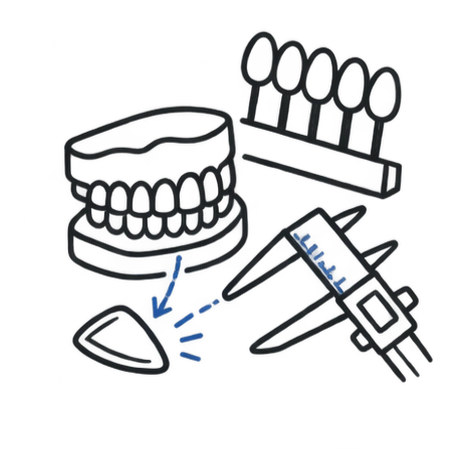
A smile that feels inconsistent
When several visible teeth differ in color, length or proportion, veneers can help create a more cohesive appearance across the smile.
Sometimes the concern isn’t one tooth — it’s how several small details work together.
Veneer ≠ crown.
A veneer covers primarily the visible front surface; a crown covers much more of the tooth.
It covers the front of the tooth — it doesn’t replace the whole tooth.
A porcelain veneer is a thin, custom-made ceramic shell designed to cover the visible front surface of a tooth. That makes it fundamentally different from a dental crown, which surrounds much more of the tooth structure.
To create room for a porcelain veneer and a predictable bonding surface, a dentist generally removes a small amount of enamel from the front and sides of the tooth. An impression or digital scan is then used to create a restoration tailored to that specific tooth.
That also means veneers deserve thoughtful planning. Once enamel has been removed, the treatment is not considered reversible, and the veneer itself may eventually need repair, rebonding or replacement if it chips, loosens or wears over time.
One tooth, a few teeth or the visible smile.
Veneer treatment doesn’t automatically mean covering every tooth you can see. The number of teeth should follow the cosmetic problem we’re solving.
Single-Tooth Veneer
One veneer can be used to blend a visibly chipped, misshapen or discolored tooth more naturally with the teeth around it. Bethesda Dental Group specifically presents veneers as an option for isolated concerns such as a chipped or cracked tooth.
- For patients who like most of their smile but have one visible tooth that consistently stands out for the wrong reason.
- For patients who want to improve several front teeth while keeping treatment focused on the area that actually shows in their smile.
Multiple Veneers
Several neighboring veneers can coordinate shape, length, shade and spacing when the cosmetic concern affects more than one visible tooth.
Veneers Within a Smile Plan
Sometimes veneers are only one part of the answer. Whitening, orthodontics, bonding or other restorative treatment may make more sense for certain teeth, while veneers are reserved for the ones that need a change in visible shape or surface.
- For patients with several different cosmetic concerns who want the most conservative treatment mix rather than automatically veneering every visible tooth.
Design first. Prepare precisely. Bond only when everything looks right.
- Design what you actually want to change
We evaluate your teeth, gums, bite, existing dental work and cosmetic goals, then plan the shade, shape and number of teeth involved. Existing decay or gum disease should be addressed before veneer treatment.
- Prepare & capture the details
A small amount of enamel is typically prepared where needed, and an impression or digital scan records the tooth precisely so the porcelain restoration can be custom made. A temporary veneer may be used while the final ceramic is being completed.
- Try it, refine it & bond it
Before final bonding, the veneer is checked for fit, shape and appearance. Once the details are right, the tooth is cleaned and the porcelain veneer is bonded securely into position.
200 reasons to choose us.
We don't ask you to trust us. We let our patients do the talking.
I hadn’t been to the dentist in longer than I wanted to admit, so I was expecting a lecture. Instead, the whole visit felt easy. My cleaning was gentle, everything was explained clearly, and I left knowing exactly what to keep an eye on and when to come back.
Melissa R.
Teeth Cleaning & Exam
Bethesda, MD
5.0 ★ · Over 200 reviews on Google · Read all reviews →
I had a small chip on my front tooth that bothered me in every photo. I expected a much bigger treatment, but bonding was enough. The shade matches beautifully and the tooth still looks completely natural.
Laura M.
Cosmetic Dental Bonding
Bethesda, MD
5.0 ★ · Over 200 reviews on Google · Read all reviews →
I drink coffee every day and felt like my teeth had gradually become much darker than they used to be. I wanted them brighter, but I definitely didn’t want that artificial super-white look. They helped me choose a shade that still looked like me, and the difference was exactly what I wanted. My smile looks fresher without looking “done.”
Emily S.
Professional Teeth Whitening
Bethesda, MD
5.0 ★ · Over 200 reviews on Google · Read all reviews →
I avoided the dentist for years because of a terrible experience when I was younger. By the time I finally booked, I was embarrassed about both my teeth and how anxious I was. Nobody made me feel judged. They talked through the sedation options with me beforehand, explained exactly what to expect and made the appointment feel completely manageable. It was the first time I left a dental office thinking, “I can actually do this again.”
Lauren D.
Sedation Dentistry
Kensington, MD
5.0 ★ · Over 200 reviews on Google · Read all reviews →
I used to think preventive dentistry just meant getting my teeth cleaned and coming back six months later. They actually took the time to explain why I kept getting cavities in the same areas and helped me change a few things at home. We also added extra protection to a couple of teeth that needed it. My visits feel much more proactive now instead of waiting for the next problem.
Nicole B.
Preventive Dentistry
Kensington, MD
5.0 ★ · Over 200 reviews on Google · Read all reviews →
I had been dealing with jaw soreness and painful clicking for months and wasn’t even sure whether I should see a dentist about it. The appointment was very thorough. They asked when the pain happened, checked how my jaw was moving and explained the difference between the joint and the surrounding muscles. I appreciated that the plan felt conservative and specific to what I was actually experiencing.
Sarah L.
TMJ Evaluation & Treatment
Chevy Chase, MD
5.0 ★ · Over 200 reviews on Google · Read all reviews →
I had already been diagnosed with sleep apnea but struggled with my CPAP enough that I wasn’t using it consistently. I talked with my sleep doctor about alternatives and then came to Bethesda Dental Group for an oral appliance. The fitting process was easy, the adjustments were explained clearly, and traveling is much simpler now. My wife is also very happy that the snoring has improved.
James R.
Sleep Apnea Oral Appliance Therapy
Bethesda, MD
5.0 ★ · Over 200 reviews on Google · Read all reviews →
I had a badly broken molar and kept putting the appointment off because I was nervous about having it removed. They showed me why the tooth couldn’t really be saved, talked me through everything before starting, and the actual extraction was much more manageable than I had built it up to be. I also appreciated that we talked about what to do with the space afterward instead of just stopping there.
Rachel P.
Tooth Extraction
Bethesda, MD
5.0 ★ · Over 200 reviews on Google · Read all reviews →
I went in with a toothache that had kept me up the night before and was honestly dreading hearing “root canal.” The team explained exactly what they were seeing and what would happen next. Once I was numb, the appointment was much easier than I expected, and the relief afterward made me wish I had come in sooner.
Michael T.
Root Canal Treatment
Bethesda, MD
5.0 ★ · Over 200 reviews on Google · Read all reviews →
I chipped an old filling and was convinced it was going to turn into a much bigger procedure. Dr. Shawn showed me exactly what was happening, explained my options clearly, and repaired the tooth without making the visit stressful. My bite feels completely normal again, and the new filling blends in so well I can barely see it.
Daniel M
Composite Filling Replacement
Bethesda, MD
5.0 ★ · Over 200 reviews on Google · Read all reviews →
Veneers are a long-term cosmetic decision. The payment doesn’t have to happen all at once.
Because porcelain veneers are generally considered cosmetic treatment, insurance coverage may be limited unless there is a qualifying clinical reason. Cherry, Sunbit, Proceed and Care Credit financing is available for eligible treatment with no hard credit check · approval in seconds · and plans from 3 to 24 months.
You don’t need a different smile. You may just want this one refined.
If the color, shape, spacing or proportions of your front teeth are what keep catching your eye, let’s determine whether porcelain veneers — or a more conservative alternative — make sense for what you want to change.