
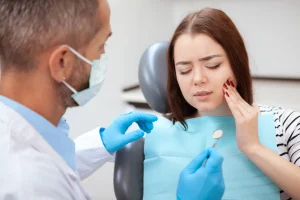
When the problem needs more than routine dentistry, we can take the next step.
Some dental problems can’t be solved with a filling, crown or routine treatment alone. Bethesda Dental Group provides selected oral surgical care for teeth, soft tissues and implant needs — starting with a careful evaluation of what actually needs to be done.
Surgery should start with a clear reason — and a clear plan.

Six situations that may need a different kind of treatment.
Oral surgery isn’t one procedure. It becomes part of the conversation when removing, releasing or surgically accessing tissue is necessary to protect or rebuild oral health.
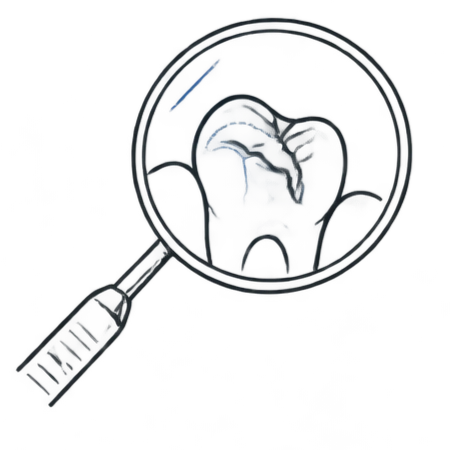
A tooth can’t be predictably saved
Severe decay, structural damage or other problems can sometimes leave too little healthy tooth to restore reliably. Bethesda Dental Group lists severe decay among its reasons for extraction.
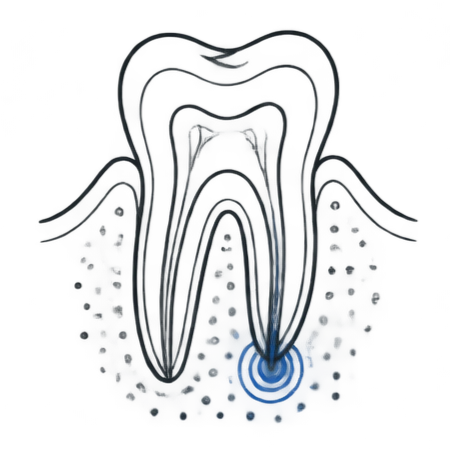
A root is fractured or infected
A fractured root, chronic infection or abscess can make surgical removal necessary when keeping the tooth is no longer the better option.
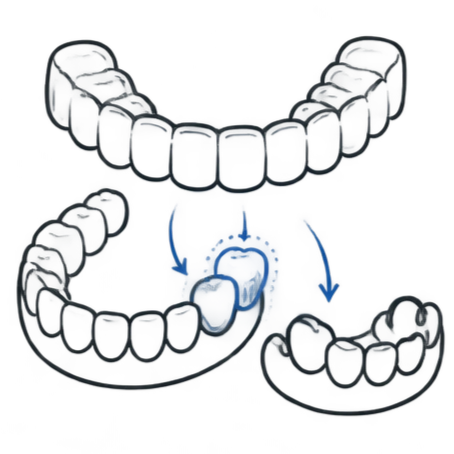
A tooth interferes with another treatment
Selected teeth may need to be removed as part of orthodontic, denture or broader restorative treatment planning.
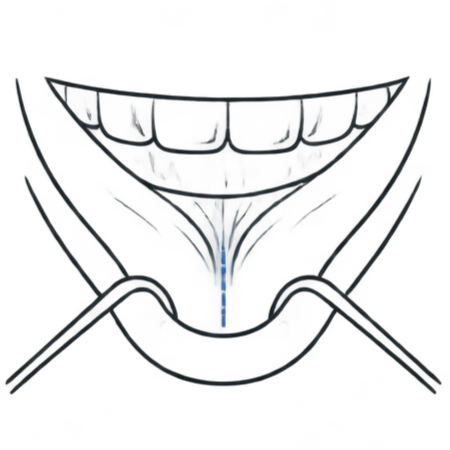
A frenum is restricting tissue movement
An unusually restrictive frenum can sometimes be treated with a frenectomy to release or reshape the tissue attachment. Bethesda Dental Group currently lists frenectomy among its oral surgery services.
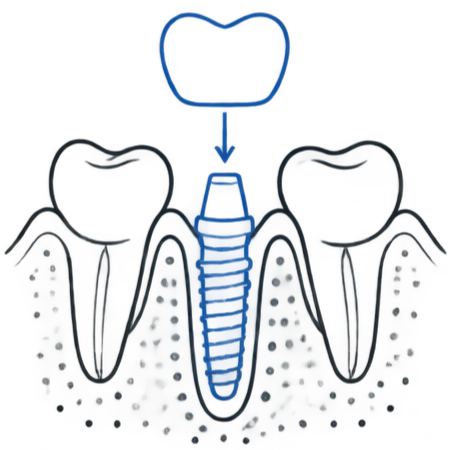
A missing tooth needs an implant foundation
Dental implant placement is itself a surgical procedure because the implant is positioned within the jawbone to create an anchor for the future restoration.
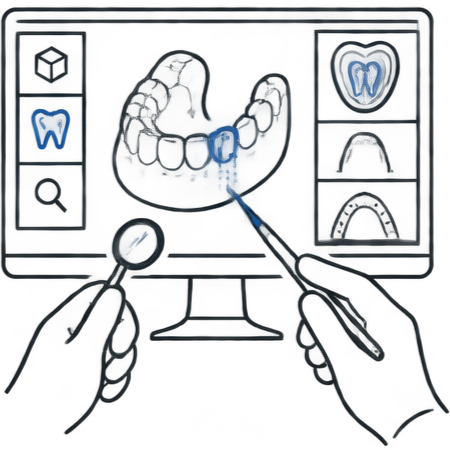
Routine treatment isn’t enough
Sometimes the first decision isn’t which surgery you need — it’s determining whether the problem can still be treated conservatively or has reached a surgical stage.
The fact that something can be treated surgically doesn’t mean surgery is automatically the first choice.
Oral surgery can happen in a dental office. Complex maxillofacial surgery is a much broader specialty — and the right provider depends on the procedure.
Oral surgery is a category of care — not a single procedure.
In dentistry, oral surgery can include procedures that involve removing teeth, modifying soft tissue or placing implants in the jaw. Bethesda Dental Group currently lists extractions, frenectomy and implant surgery within its oral surgery care.
The important question is not simply whether a procedure is “surgical,” but why it’s necessary. Imaging, the condition of the tooth and surrounding tissues, your health history and the treatment goal all influence that decision.
More complex surgery involving the jaws, face, trauma or other advanced conditions belongs to the broader specialty of oral and maxillofacial surgery and may require specialist care depending on the case.
PRF (Platelet-Rich Fibrin)
Platelet-Rich Fibrin (PRF) is a natural treatment that uses a small sample of your own blood to support and accelerate the body’s healing process. The blood is processed to create a concentrated fibrin matrix rich in platelets, growth factors, and healing cells.
In dentistry, PRF can be placed at surgical sites following procedures such as tooth extractions, bone grafting, and dental implant placement to promote tissue healing, support bone regeneration, and improve overall recovery.
Because PRF is created entirely from the patient’s own blood, it provides a natural and biocompatible way to enhance healing.
Remove what can’t be saved. Release restrictive tissue. Rebuild what’s missing.
The surgical approach depends entirely on the problem we’re solving. Bethesda Dental Group currently provides several different procedures under its oral surgery offering.
Surgical Tooth Removal
When restorative treatment can no longer predictably save a tooth, removal may be recommended to address infection, fracture or other serious damage.
- For teeth with severe decay, fractured roots, chronic infection or other conditions where keeping the tooth is no longer the better option.
- For selected patients where the location or tension of a frenum is creating a clinically meaningful tissue or functional concern.
Frenectomy
A frenectomy releases or removes part of a restrictive frenum — the small band of tissue connecting areas such as the lip and gums. Bethesda Dental Group confirms this procedure among its oral surgery services.
Same-Day Bridges
Implant placement involves positioning an implant within the jawbone to create a stable foundation for a future crown, bridge or implant-supported restoration.
- For patients replacing missing teeth whose bone, tissues and overall treatment conditions make implant placement appropriate.
Understand the problem. Plan the procedure. Protect the healing.
- Find out exactly what needs treatment
We examine the area, review your health history and use appropriate dental imaging to understand the tooth, tissue or implant site before recommending surgery.
- Plan the procedure & your comfort
We explain what will be done, why it’s needed and what to expect before, during and after the procedure, including the appropriate anesthesia or comfort plan for your case.
- Heal & plan what comes next
After surgery, we give you specific home-care instructions and monitor healing when follow-up is needed. Significant dental surgical procedures may require continued follow-up to confirm healthy recovery.
200 reasons to choose us.
We don't ask you to trust us. We let our patients do the talking.
I hadn’t been to the dentist in longer than I wanted to admit, so I was expecting a lecture. Instead, the whole visit felt easy. My cleaning was gentle, everything was explained clearly, and I left knowing exactly what to keep an eye on and when to come back.
Melissa R.
Teeth Cleaning & Exam
Bethesda, MD
5.0 ★ · Over 200 reviews on Google · Read all reviews →
I had a small chip on my front tooth that bothered me in every photo. I expected a much bigger treatment, but bonding was enough. The shade matches beautifully and the tooth still looks completely natural.
Laura M.
Cosmetic Dental Bonding
Bethesda, MD
5.0 ★ · Over 200 reviews on Google · Read all reviews →
I drink coffee every day and felt like my teeth had gradually become much darker than they used to be. I wanted them brighter, but I definitely didn’t want that artificial super-white look. They helped me choose a shade that still looked like me, and the difference was exactly what I wanted. My smile looks fresher without looking “done.”
Emily S.
Professional Teeth Whitening
Bethesda, MD
5.0 ★ · Over 200 reviews on Google · Read all reviews →
I avoided the dentist for years because of a terrible experience when I was younger. By the time I finally booked, I was embarrassed about both my teeth and how anxious I was. Nobody made me feel judged. They talked through the sedation options with me beforehand, explained exactly what to expect and made the appointment feel completely manageable. It was the first time I left a dental office thinking, “I can actually do this again.”
Lauren D.
Sedation Dentistry
Kensington, MD
5.0 ★ · Over 200 reviews on Google · Read all reviews →
I used to think preventive dentistry just meant getting my teeth cleaned and coming back six months later. They actually took the time to explain why I kept getting cavities in the same areas and helped me change a few things at home. We also added extra protection to a couple of teeth that needed it. My visits feel much more proactive now instead of waiting for the next problem.
Nicole B.
Preventive Dentistry
Kensington, MD
5.0 ★ · Over 200 reviews on Google · Read all reviews →
I had been dealing with jaw soreness and painful clicking for months and wasn’t even sure whether I should see a dentist about it. The appointment was very thorough. They asked when the pain happened, checked how my jaw was moving and explained the difference between the joint and the surrounding muscles. I appreciated that the plan felt conservative and specific to what I was actually experiencing.
Sarah L.
TMJ Evaluation & Treatment
Chevy Chase, MD
5.0 ★ · Over 200 reviews on Google · Read all reviews →
I had already been diagnosed with sleep apnea but struggled with my CPAP enough that I wasn’t using it consistently. I talked with my sleep doctor about alternatives and then came to Bethesda Dental Group for an oral appliance. The fitting process was easy, the adjustments were explained clearly, and traveling is much simpler now. My wife is also very happy that the snoring has improved.
James R.
Sleep Apnea Oral Appliance Therapy
Bethesda, MD
5.0 ★ · Over 200 reviews on Google · Read all reviews →
I had a badly broken molar and kept putting the appointment off because I was nervous about having it removed. They showed me why the tooth couldn’t really be saved, talked me through everything before starting, and the actual extraction was much more manageable than I had built it up to be. I also appreciated that we talked about what to do with the space afterward instead of just stopping there.
Rachel P.
Tooth Extraction
Bethesda, MD
5.0 ★ · Over 200 reviews on Google · Read all reviews →
I went in with a toothache that had kept me up the night before and was honestly dreading hearing “root canal.” The team explained exactly what they were seeing and what would happen next. Once I was numb, the appointment was much easier than I expected, and the relief afterward made me wish I had come in sooner.
Michael T.
Root Canal Treatment
Bethesda, MD
5.0 ★ · Over 200 reviews on Google · Read all reviews →
I chipped an old filling and was convinced it was going to turn into a much bigger procedure. Dr. Shawn showed me exactly what was happening, explained my options clearly, and repaired the tooth without making the visit stressful. My bite feels completely normal again, and the new filling blends in so well I can barely see it.
Daniel M
Composite Filling Replacement
Bethesda, MD
5.0 ★ · Over 200 reviews on Google · Read all reviews →
When surgery is necessary, understanding the cost should be part of the plan.
Coverage for oral surgical procedures depends on the treatment and your individual PPO benefits. Bethesda Dental Group accepts PPO insurance, and Cherry, Sunbit, Proceed and Care Credit financing is available for eligible care with no hard credit check · approval in seconds · and plans from 3 to 24 months.
If you’ve been told you may need surgery, start by finding out exactly why.
Whether the concern involves a tooth that can’t be saved, restrictive soft tissue or an implant site, we’ll evaluate the problem and explain the appropriate next step before treatment begins.